Why Dr. Geo 'loves' Active Surveillance
Scott Adams of Dilbert cartoon fame died today from prostate cancer
By Howard Wolinsky
When his turn came on the Active Surveillance 2026 webinar on Jan. 3, there were no slides on the screen—just Dr. Geo Espinosa, naturopathic urologist from NYU Langone, talking straight into the camera about why, in his words, he “loves” Gleason 6 prostate cancer.
Men listening who had just been told they had cancer might not feel much love for it. But Dr. Geo’s point was disarmingly simple: almost all men diagnosed with Gleason 6, low‑risk disease will not die from it.
Instead, that diagnosis can serve as a spark —a wake‑up call that finally pushes them to do the hard, boring things everybody knows they should do and almost nobody actually does—eat better and move more every week.
“People always ask, ‘What’s the best way to exercise?’” he said. “Let’s not even have that conversation. The best exercise is whatever you will do consistently.”
Not what kills you—and what does
Looking across the Active Surveillance literature, Dr. Geo reminded the audience of a sobering but oddly reassuring pattern: in virtually every AS study that includes men with low‑ and favorable intermediate‑risk disease, very few die of prostate cancer itself.
Most die of something else—most often heart attacks, sometimes other cancers.
This is not an argument to ignore the prostate. It is an argument to widen the lens.
“If you’re diagnosed with low‑risk prostate cancer and you don’t already have a cardiologist, your first move should be to get a good one,” he told the group. The No. 1 killer of men on Active Surveillance is cardiovascular disease, not the tumor being watched.
So his clinical stance is blunt: if you come to see him, he assumes you don’t just want to avoid death from prostate cancer; rather, you want to avoid dying prematurely from anything. That assumption shapes everything that follows.
Fish, fish oil, and a proliferative marker
A 2025 trial at UCLA, CAPFISH‑3, provided fresh data to hang these ideas on. In the randomized Phase 2 study of men on Active Surveillance, one group shifted to a higher omega‑3 diet—more fish, fewer omega‑6‑heavy seed oils and fried foods—while the other followed the same diet but added about 2 grams of fish oil supplements daily.
Both groups moved from a typical American omega‑6:omega‑3 ratio of roughly 15:1 down toward 4:1. Then the researchers biopsied the prostate and looked at Ki‑67, a marker of tumor cell proliferation linked to progression and mortality risk.
The diet‑only group saw about a 15% drop in Ki‑67 versus baseline. The diet‑plus‑fish‑oil group saw about a 24% reduction—a difference that was both clinically and statistically significant. Triglycerides also fell more in the supplement arm, which fits with why pharmaceutical‑grade omega‑3s exist in the first place: to lower triglycerides and reduce cardiovascular risk.
For Dr. Geo, the study reinforced a view he already held: omega‑3 fatty acids from food are important, but there is also a place for high‑quality fish oil supplementation in men on AS who are trying to tilt both their cardiovascular and cancer risk in the right direction.
Lifestyle as adjuvant therapy
He then pointed to a JAMA study that followed a multiracial cohort of men with prostate cancer who adopted a broad lifestyle program: more exercise and a low‑inflammatory diet built around whole foods and fewer processed products. Men who made those changes after diagnosis had a lower risk of cardiovascular death and a moderately lower risk of prostate cancer death.
This is the through‑line of his practice: diet and movement are not soft, optional add‑ons to surveillance. They are, in effect, a parallel treatment aimed at the real threats these men face—heart disease, metabolic dysfunction, and the subset of cancers whose behavior is influenced by chronic inflammation, lipids, and insulin resistance.
The blood tests that matter twice
When Dr. Geo sends a man on AS to a cardiologist, he is not just thinking about the heart. The standard cardiovascular workup—total cholesterol, LDL, HDL, triglycerides, C‑reactive protein—maps prostate cancer biology as well.
He highlighted several numbers:
Total cholesterol: Above 240, prostate cancer mortality risk rises. He is not obsessed with pushing every man below 200; for most of his prostate cancer patients, “under 240” is the key threshold. Too low can be a problem as well, given how central cholesterol is as a molecule.
CRP (C‑reactive protein): A marker of systemic inflammation tied to both heart disease and prostate cancer progression. He wants CRP under 3, and ideally under 2. In men with CRP between 3 and 5, prostate cancer outcomes are noticeably worse.
Triglycerides: A cutoff around 150 mg/dL appears important; levels above that mark correlate with more advanced prostate cancer compared with levels under 150. Here again, a Mediterranean or “plant‑forward” diet that includes fish—and fish oils from supplements or prescriptions—tends to drive triglycerides down.
LDL and lipid ratios: Higher LDL associates with more aggressive and metastatic disease, and the ratios of LDL to total cholesterol, and total cholesterol to HDL, matter as much as the absolute values. He reserves the deeper dive on ratios for his podcast and website, but the message is clear: these are shared risk pathways, not separate silos.
For men on AS, these labs can function as a shared scorecard for both cardiac and oncologic risk—and as a set of levers they can actually pull.
A practical script for the man on AS
By the time he wrapped up, Dr. Geo had sketched a pragmatic, almost minimalist plan for men on Active Surveillance:
Eat in a Mediterranean, plant‑forward pattern, rich in whole foods and fish, low in processed foods and seed oils.
Consider a few evidence‑backed supplements—especially a good‑quality fish oil and vitamin D3—rather than chasing long lists of pills.
Accumulate 150–300 minutes of moderate‑intensity exercise each week; the type matters less than the fact that you do it, week in and week out.
Establish care with a thoughtful cardiologist and track total cholesterol (keep it under 240), triglycerides (keep them under 150), CRP (aim under 3, ideally under 2), LDL, HDL, and their key ratios.
In his hands, Active Surveillance isn’t “doing nothing.” It is a two‑track strategy: watch the prostate carefully while aggressively optimizing the rest of the body in ways that make both cardiac events and cancer progression less likely.
For readers of The Active Surveillor, that is an empowering message. The biopsy result is not the only number that matters. There are many others—some in the blood, some on your plate, some on your step counter—that you can influence every day.
Check out Dr. Geo’s podcast:

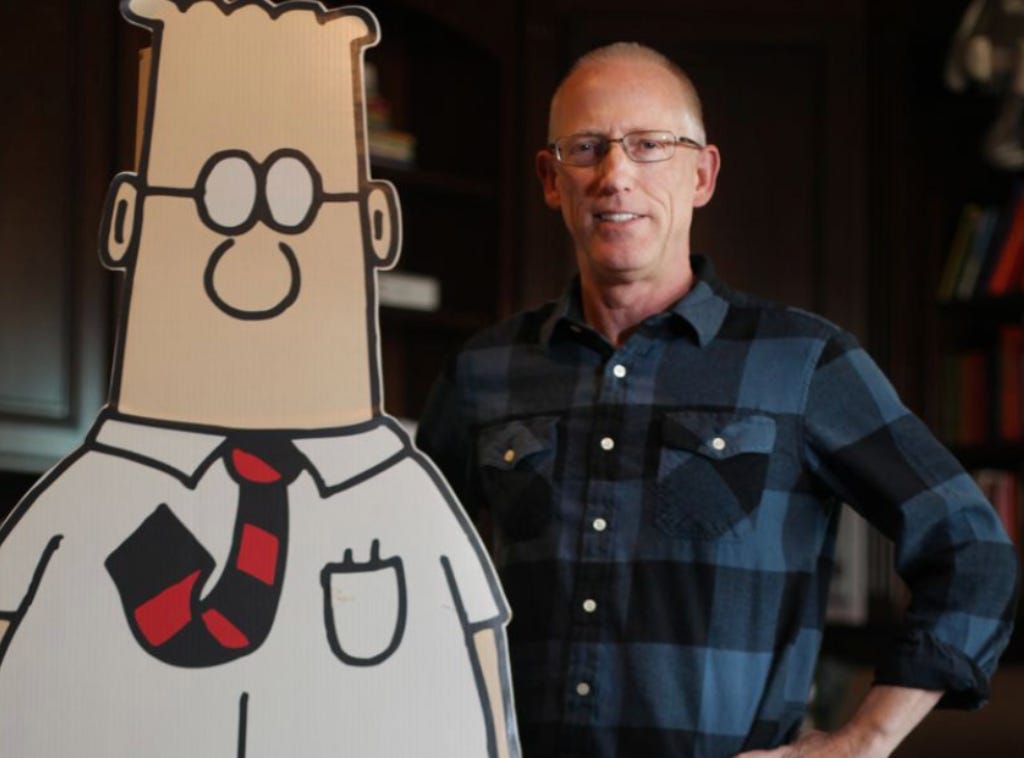
Cartoonist Scott Adams died today for metastatic PCa
By Howard Wolinsky
Back when I worked in a cubicle at the Chicago Sun-Times, I loved Scott Adams’ Dilbert cartoons about life in the cubicle lane. I’m still uncertain about how to distinguish between vision and mission statements.
Sad to report, as he predicted days ago, his time was coming to an end. Adams, 68, died Tuesday from metastatic prostate cancer.
The announcement came via Adams’ video channels, where he livestreamed daily until Monday morning.
He announced last May that he, like President Joe Biden has been diagnosed with the “bad kind of cancer”-- Gleason 9 cancer. Although politically he opposed Biden, he was sympathetic to the ex-President Biden and their shared plight.
He told his followers: “There’s something you need to know about prostate cancer. If it’s localized and it hasn’t left your prostate, it’s 100% curable. But if it leaves your prostate and spreads to other parts of your body ... it is 100% not curable.”
“Some of you have already guessed, so this won’t surprise you at all, but I have the same cancer Joe Biden has,” he said on his livestream on May 19, 2025. “I also have prostate cancer that has also spread to my bones, but I’ve had it longer than he’s had it. Well, longer than he’s admitted having it.”
In November 2025, Adams, a vocal Trump supporter, publicly posted on X (formerly Twitter) that he had metastatic prostate cancer and his healthcare provider, Kaiser Permanente of Northern California, had “dropped the ball” in scheduling his intravenous treatment with the newly FDA-approved drug Pluvicto. He stated he was “declining fast” and asked the President for help to “save my life,”
In December, he reported that he was “paralyzed” from the waist down. Even though he had sensation, he couldn’t move any of those muscles.
Trump responded to Adams’s plea on Truth Social, writing simply, “On it!“.
Subsequently:
Trump’s team, including HHS Secretary Robert F. Kennedy Jr. and Centers for Medicare & Medicaid ServicesAdministrator Mehmet Oz, reached out to Adams and representatives from Kaiser Permanente to resolve the issue.
Adams reported the next day that he had an appointment to receive the cancer drug infusion.
Kaiser Permanente released a statement saying Adams’s care was already underway and his oncology team was working closely with him.
President Trump posted a tribute on Truth Social, calling Adams a “Great Influencer” and a “fantastic guy, who liked and respected me when it wasn’t fashionable to do so”.
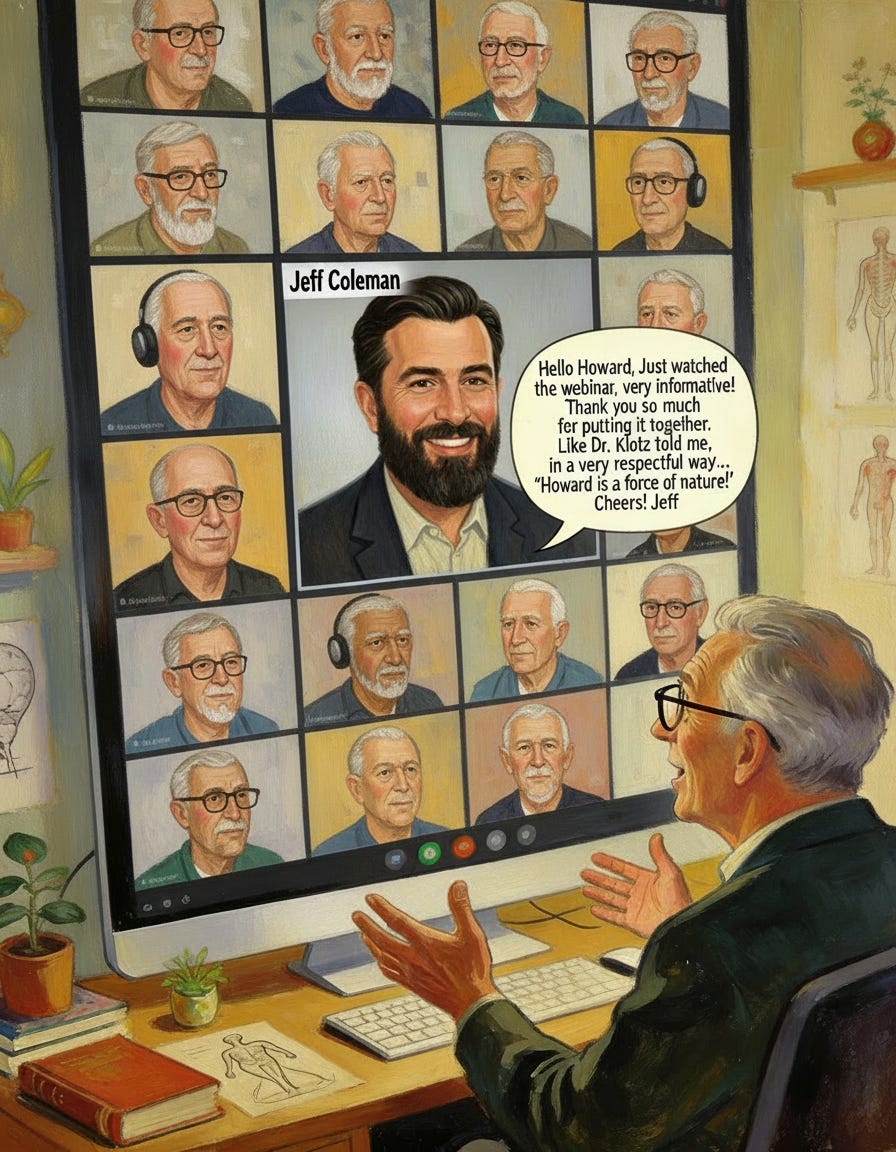
Founding subscriber Jeff Coleman’s view of the Active Surveillance ‘26 webinar. Sign up for a paid subscription and I’ll share the YouTube video.
The Active Surveillor annual subscriptions are on sale. Check it out:
This message should be transformed in a poster in every urologist’s office! Most still claim that nothing you’d do has any influence on evolution of G6 and/or higher grades for that matter. Thank you Howard. I enjoy Dr Geo’s podcasts.